

When the algorithm finds you before the clinician does

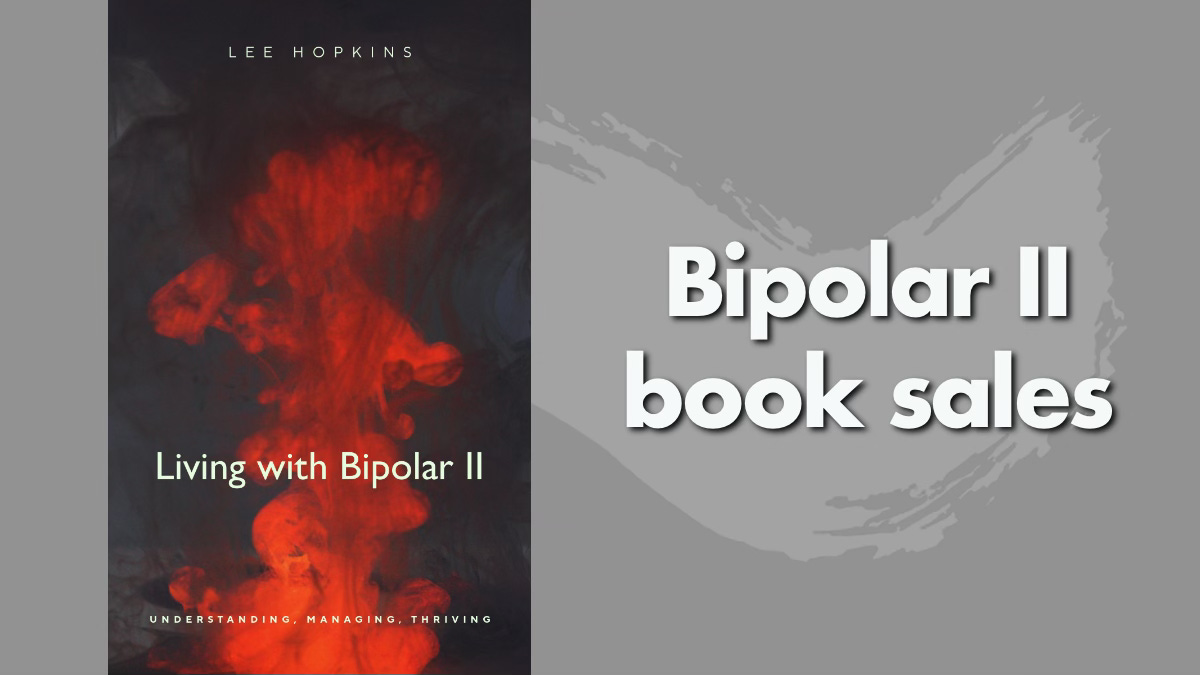
Something odd happened in my Amazon sales dashboard this month. My Bipolar II book—Living with Bipolar II: Understanding, managing, thriving—quietly overtook the AuDHD book in royalties. Six copies sold plus Kindle Unlimited reads. Not a fortune. But the AuDHD book—Understanding AuDHD— normally outsells it comfortably, so the reversal caught my eye.
I went looking for what might have changed. What I found was a convergence.
World Bipolar Day falls on 30 March, three days from now, and the media cycle leading up to it has been busier than usual. Psychiatric Times ran bipolar disorder as their entire February 2026 theme. The American Journal of Psychiatry dedicated a major update to bipolar neurobiology and treatment in their March issue. A comprehensive state-of-the-art review of Bipolar II disorder specifically was published in World Psychiatry—unusual, because BD-II is typically the afterthought in bipolar research, the quieter sibling nobody quite gets around to studying properly.
And in early March, Jax Taylor from Vanderpump Rules publicly disclosed his bipolar and PTSD diagnoses after leaving an inpatient treatment facility. Reality television diagnoses have a reliable effect on search traffic. People hear a familiar name attached to an unfamiliar condition, and they go looking.
So: awareness day lead-up, professional journal attention, celebrity disclosure, and a rare BD-II-specific review, all landing in the same window. My book is probably catching the tail end of people searching specifically for Bipolar II rather than bipolar generally.
What the spike actually tells us
Here’s what interests me about this pattern. It’s not the sales. Six copies and some page reads won’t fund anyone’s retirement. What interests me is what it reveals about how people find their way to understanding a condition that affects roughly one in every two hundred people on the planet.
They find it through awareness days. Through celebrity disclosures. Through algorithms that surface a book because search traffic happened to spike in the right week. They find it, in other words, sideways. Accidentally. Because something in the cultural noise briefly aligned with the question they’d been carrying quietly for months or years.
They don’t find it through their GP, who statistically has less than an hour of psychiatric training in their entire medical degree. They don’t find it through their psychologist, who may have been taught that Bipolar II is just a milder version of Bipolar I—a claim the research has been dismantling for years. The average diagnostic delay for Bipolar II is still over ten years. Ten years of being told you have depression. Ten years of antidepressants that don’t quite work, or work briefly and then stop, or trigger something that looks suspiciously like hypomania but nobody mentions it because nobody thought to ask.
The fact that it takes a reality TV star checking out of a treatment facility, or a date on a calendar, or a Substack algorithm to get someone to the information they need—that’s not a feel-good awareness story. That’s a diagnostic system failing in plain sight.
The quiet ones
I wrote Living with Bipolar II because I spent years inside that diagnostic gap myself. Misdiagnosed, medicated for the wrong thing, compensating in ways that looked like high functioning and felt like survival. The book exists for the people who suspect something doesn’t add up but can’t find language for what they’re experiencing, because the clinical system keeps handing them the wrong vocabulary.
If you’re one of the people who found this post through whatever algorithmic accident brought you here, I’m glad you did. And if you know someone who’s been cycling through depression treatments that never quite land, who has periods of sharp productivity followed by crashes they can’t explain, who has been told they’re just anxious, or stressed, or not trying hard enough—it might be worth a conversation.
World Bipolar Day is 30 March. Vincent van Gogh’s birthday, if you want something to mention at dinner. The awareness campaign is fine. I’d rather people didn’t need an awareness day to find accurate information about their own brain. But until the diagnostic system catches up, we work with what we’ve got.
Living with Bipolar II: Understanding, managing, thriving is available on all the usual book sites. And free for paid subscribers here on Substack: quiethalf.substack.com/subscribe