
It’s not about money, it’s about dopamine

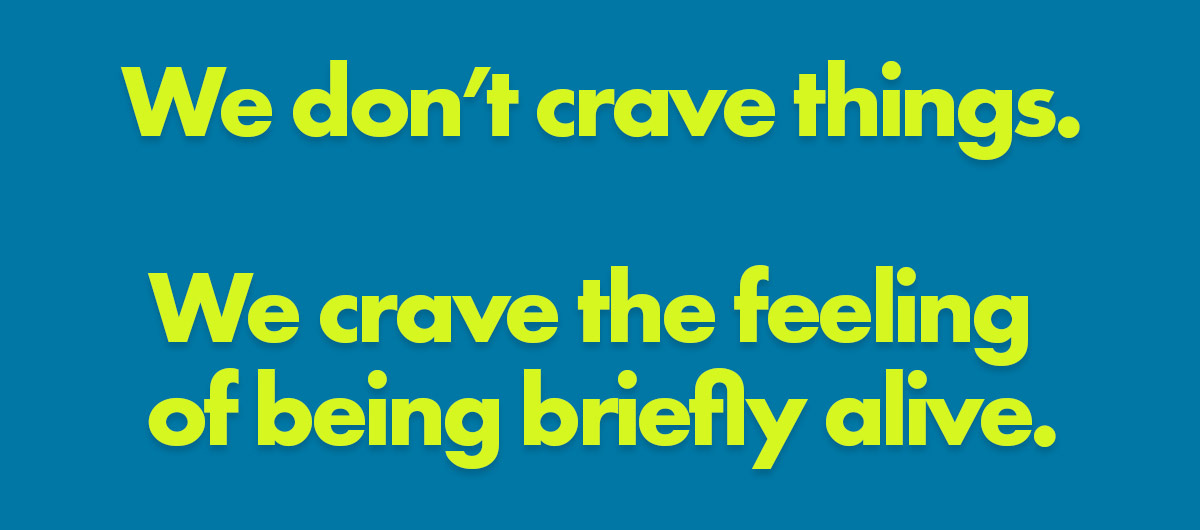
I’ve spent decades trying to budget my way out of a dopamine deficiency. Turns out, spreadsheets don’t stand a chance against the thrill of a parcel arriving from Lazada.
Every time I buy something shiny and unnecessary—another gadget, another “productivity” tool that promises to fix my ADHD by draining my bank account—my brain lights up like the pokies at 2am.
It’s not greed. It’s chemistry.
The dopamine trap disguised as retail therapy
The neurotypical world calls it impulse buying.
The AuDHD world calls it Tuesday.
See, our brains don’t run on steady supply. They run on spikes—bursts of dopamine that reward curiosity, novelty, and anything that smells faintly of potential improvement.
Shopping is the perfect storm: novelty, anticipation, sensory overload, and that brief, sweet moment when it feels like we’ve solved everything wrong with life by adding it to the cart.
Psychologists call this “reward prediction error”. I call it “the gap between reality and checkout”.
Why the system sets us up to fail
The world isn’t built for neurodivergent reward systems.
It’s built for dopamine stability—slow, delayed gratification, long-term financial goals.
But we don’t live in a society that rewards patience. It rewards consumption.
Advertising knows how to hijack your brain better than your therapist does.
The whole economic system depends on keeping you slightly unsatisfied—not unhappy enough to rebel, but just itchy enough to buy.
So when my colleague Gaye says I chase dopamine through purchases, she’s right.
But she’s also describing a brain doing its best to self-regulate in a system designed to overstimulate.
The guilt spiral
Here’s the thing: every impulsive buy comes with a hangover.
The dopamine fades, the bank balance doesn’t.
And shame arrives like an unpaid bill.
But shame doesn’t fix dopamine either.
It just keeps the cycle going—boredom, purchase, regret, repeat.
This is why “just budget better” advice feels like telling a drowning man to plan his breaths.
It’s not willpower that’s missing. It’s regulation.
The better question
What if the real skill isn’t “resisting” dopamine but retraining it?
If the brain needs stimulation, fine. Let’s feed it. But with something that won’t charge interest.
Create your own dopamine menu:
Learning something absurdly specific.
Building something with your hands.
Exploring an alley you’ve never walked before.
Finishing the bloody blogpost you started two months ago.
Tiny, novel, immediate, achievable. Dopamine doesn’t care if it’s from Bunnings or a brisk walk in the rain. It just wants to know you’re alive and paying attention.
And if all else fails…
Make the impulse expensive to reach.
A separate account. A 24-hour rule.
Or a mate who’ll text you, “Really, mate? Another smart light bulb?”
My own rule is simple: if it promises to fix me, it probably won’t.
If it promises to amuse me, maybe.
If it promises free shipping, definitely not.
The quiet realisation
It took years to see that my money problem wasn’t about money.
It was about trying to fill silence with stimulation, uncertainty with acquisition.
The dopamine wasn’t wrong—it was just bored.
Now, when the itch hits, I try to ask: What am I really trying to feel right now?
Sometimes the answer is “excitement.”
Sometimes it’s “control.”
And sometimes it’s just “less bloody human for five minutes.”
Either way, I’m learning to let the chemistry pass.
Because the truth is, it’s not about money.
It’s about meaning.
References
Barkley, R. A. (2015). Attention-deficit hyperactivity disorder: A handbook for diagnosis and treatment (4th ed.). Guilford Press.
Biederman, J., & Faraone, S. V. (2006). The effects of attention-deficit/hyperactivity disorder on employment and household income. Medical Psychiatry, 28(2), 103–112.
Frank, M. J., Seeberger, L. C., & O’Reilly, R. C. (2004). By carrot or by stick: Cognitive reinforcement learning in Parkinsonism. Science, 306(5703), 1940–1943. https://doi.org/10.1126/science.1102941
Niv, Y., Daw, N. D., Joel, D., & Dayan, P. (2007). Tonic dopamine: Opportunity costs and the control of response vigor. Psychopharmacology, 191, 507–520. https://doi.org/10.1007/s00213-006-0502-4
Robbins, T. W., & Arnsten, A. F. T. (2009). The neuropsychopharmacology of fronto-executive function: Monoaminergic modulation. Annual Review of Neuroscience, 32, 267–287. https://doi.org/10.1146/annurev.neuro.051508.135535
Rutledge, R. B., Skandali, N., Dayan, P., & Dolan, R. J. (2014). A computational and neural model of momentary subjective well-being. Proceedings of the National Academy of Sciences, 111(33), 12252–12257. https://doi.org/10.1073/pnas.1407535111
Volkow, N. D., Wang, G.-J., Kollins, S. H., Wigal, T. L., Newcorn, J. H., Telang, F., Fowler, J. S., Zhu, W., Logan, J., Ma, Y., Pradhan, K., Wong, C., & Swanson, J. M. (2009). Evaluating dopamine reward pathway in ADHD: Clinical implications. JAMA, 302(10), 1084–1091. https://doi.org/10.1001/jama.2009.1308