
Embracing Neurodiversity
Substack article—free to read. Paid subscribers can read the whole book today.

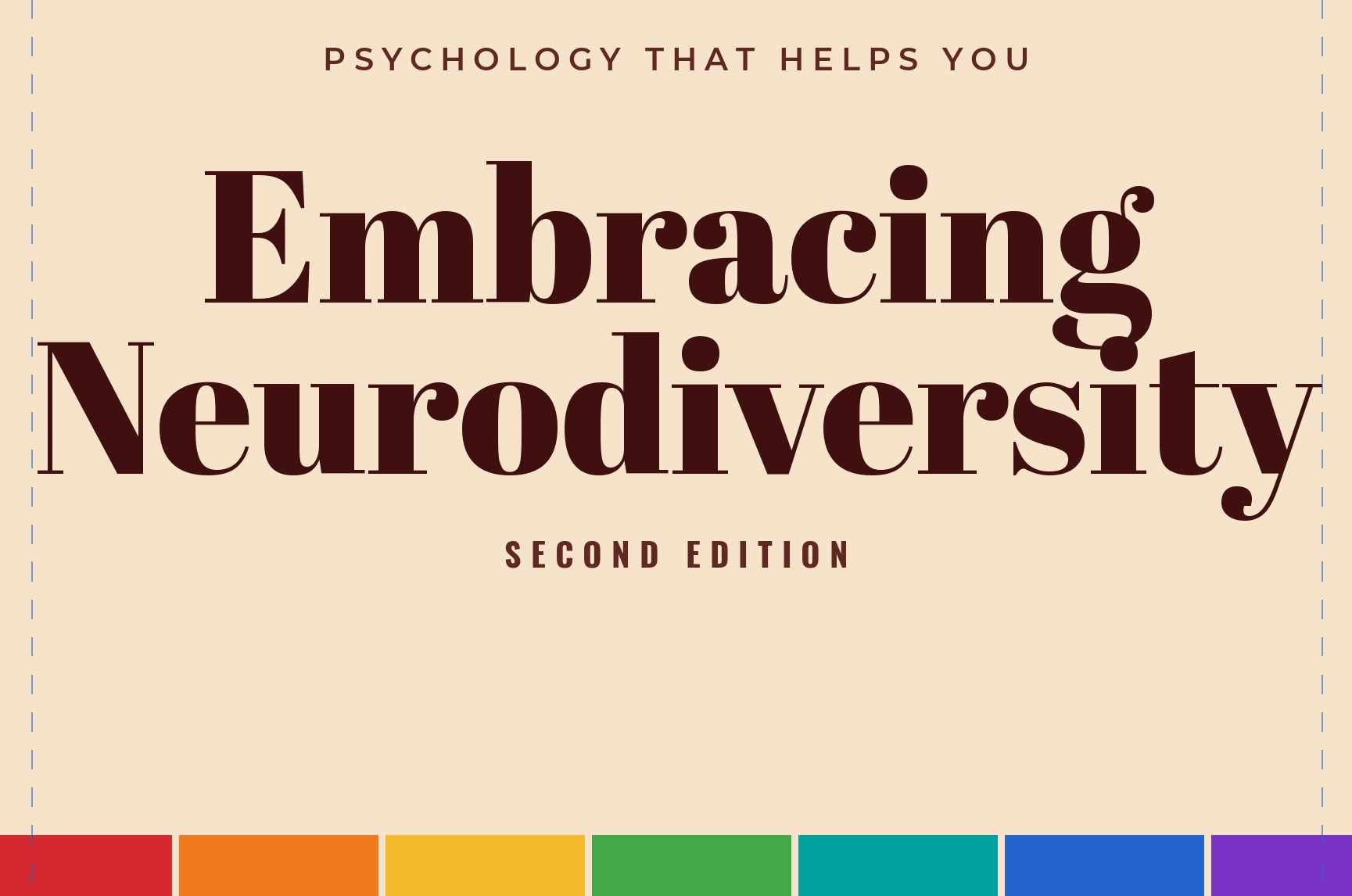
The book the noise made necessary
The first edition of this book was written by a man who did not yet know he was describing himself. I was diagnosed autistic and ADHD in January 2025, a few weeks before it went to press. You can do the arithmetic.
So the version some of you read was accurate, warm, and very slightly touristic—the work of someone who could describe the country well enough because he’d been staring at it his whole life, but who could not yet admit he lived there. A year on, I’ve unpacked. The diagnosis has stopped being news and become furniture. And I’ve spent that year running a clinical practice through the lens of a brain I finally have the manual for.
That is the personal half of why this second edition exists. The other half is that while I was quietly unpacking, the conversation about neurodiversity caught fire. Not the warming kind. The kind you ring someone about.
More than half of it is wrong
Here is the fact that reorganised the book. Most people now meet their own neurology not in a consulting room or a textbook but in a thirty-second vertical video, delivered by someone who might be a clinician, might have hard-won lived experience, or might be a nineteen-year-old who found the topic a fortnight ago and found, far more importantly, that it performs.
When researchers at the University of East Anglia worked through more than five thousand of those videos last year, they found that fifty-two per cent of the most-watched ADHD posts and forty-one per cent of the autism ones were inaccurate—and that neurodivergence was the single worst-served corner of the entire mental-health internet. Sit with the ADHD figure. Better than half. You’d do about as well flipping a coin, except the coin doesn’t come with a confident presenter and forty thousand likes telling you which way it landed.
I have some standing to talk about this, and not the flattering kind. For about a decade from 2005 I was one of Australia’s loudest evangelists for social media. I stood on stages and promised rooms full of people these platforms would connect us, inform us, and set the conversation free. I believed every word. I was wrong in ways that took me years to see—which makes me, of all people, qualified to tell you exactly what the megaphone does to the truth on its way through. It speeds it up, strips its caveats, and rewards it for sounding certain. Neurodiversity, which is very nearly nothing but caveats, never stood a chance.
What’s new this time
So this edition is an attempt to be the quiet, careful, properly referenced thing the noise made necessary. Three things are genuinely new. Every clinical claim is now sourced, with references you can check yourself, because a psychologist who cites nothing is just a bloke with opinions. There is a new chapter on the noise itself—the algorithms, the politics, and the enamel pins. And there is a new chapter on what neurodivergence looks like outside the English-speaking world, written from a country where the word does not really exist yet.
Underneath all of it sits the one idea the whole book turns on: how well a person functions depends on the fit between their wiring and the room they were handed to live in, not on the wiring alone. Change the room, and you change the outcome. It is, quietly, an argument against blaming yourself for a mismatch you were never told about.
It is also short, on purpose. A book that spends whole chapters on attention so fierce it forgets to eat has no business then demanding three hundred extra pages of throat-clearing from readers whose attention is the very currency the book is about. A doorstop on the subject of cognitive load would be a small act of hypocrisy with a barcode on it.
Rather listen?
The DeepDive team took the whole book apart and talked their way back through it—the misinformation problem, the goodness-of-fit idea, the late-diagnosis grief nobody warns you about. If reading a piece about a book about attention feels like one loop too many today, press play and let them walk you through it instead.
One honest thing about how it was made
The first edition carried a co-author, ‘with Claude Leclerque’. That was a surname I hung on an artificial intelligence to make the credit read like a person—partly a joke, partly because I hadn’t yet worked out how to say the plain thing out loud. The plain thing is this: I write with an AI. The thinking is mine, the clinical judgement is mine, the final ‘no’ is mine, and every claim in the book is one I’ve checked and will stand behind. A book about brains, written partly by a machine that imitates one, ought at least to be straight about how it was made. So that’s how it was made. Make of it what you will.
How to read it
This article is free, and stays free. The offer is simpler than that: if you’re a paid subscriber to Letters from the Quiet Half, you can read the entire second edition right now. The download link is in the paid Library, and there’s a clean EPUB waiting for you on BookFunnel.
If you’d rather own it on your Kindle or in paperback, it’s up for pre-order and publishes on 6 August. And if you’ve been sitting on the fence about subscribing, this is the month the fence got uncomfortable—quiethalf.substack.com/subscribe
Either way: the first edition was a map. This one is drawn by someone who has finally stopped pretending he’s passing through.
What struck me most while reading this was how honest the author is about his own journey. He’s stopped playing the "tourist" and is finally owning his life after the diagnosis. I really resonate with his point about the misinformation on social media; it’s so easy to get swept up by those quick, snappy videos that oversimplify complex neurological differences. It reminds me that we’re often just struggling because the environment we’re in doesn’t fit our wiring, not because there’s something "wrong" with us.