
A slightly uncomfortable book

A slightly uncomfortable addition to the library
A new book has quietly joined the library for paid subscribers.
The Convenient Monster.
It is probably the most uncomfortable book in the collection so far.
Most public conversations about harm follow a reassuring structure. Something terrible happens. A villain appears. Outrage gathers around the villain. Eventually the villain is punished, and the story resolves.
The structure feels morally satisfying because it tells us the danger comes from a small number of abnormal people. Monsters. Once the monster has been identified and condemned, the rest of the world can return to normal.
But some problems have a peculiar habit of surviving the removal of their villains.
Traffickers are arrested. The trade continues.
Corrupt executives are prosecuted. The incentives remain.
Institutions apologise. The structure that produced the harm quietly persists.
At some point the question begins to shift.
Not just who did this, but what makes it possible for this to keep happening?
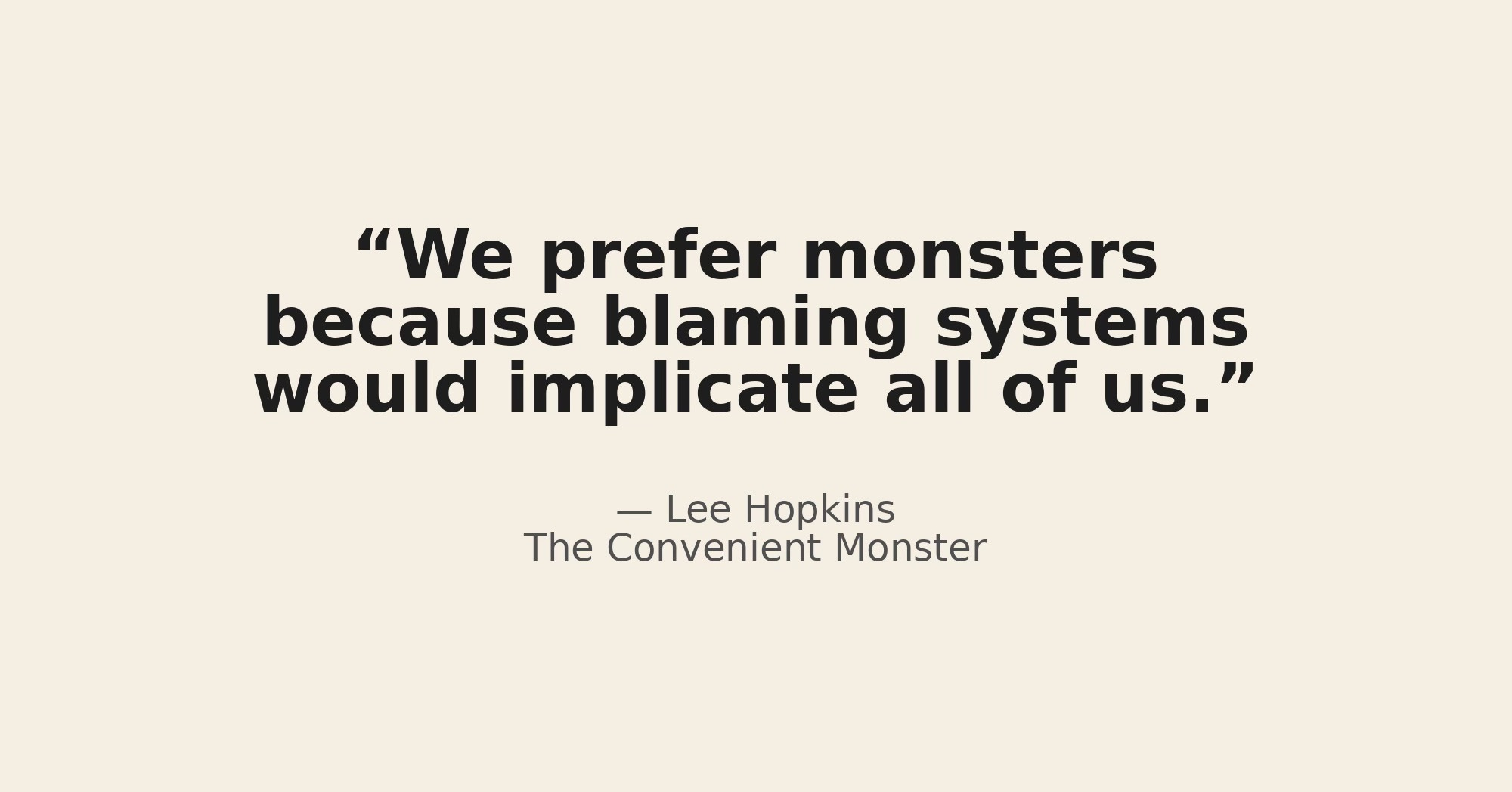
That question is much less comfortable, because systems rarely exist independently of the societies that sustain them. Systems involve incentives, markets, institutions, and the ordinary human tendency to look away from things that feel complicated or inconvenient.
The monster story solves that discomfort very efficiently.
This book explores the psychology of that story.
It looks at why societies instinctively search for villains, why outrage tends to concentrate on individuals, and why systemic explanations often struggle to gain traction even when the evidence points in that direction.
None of this is about defending wrongdoing. It is about asking whether the explanations we prefer might sometimes prevent us from understanding the problem clearly.
If you have read The Collapse of Knowledge or It’s the Circumstances, the argument will probably feel familiar. It lives in the same intellectual neighbourhood: questioning explanations that feel emotionally satisfying but empirically thin.
The book is now available in the paid library—quiethalf.substack.com/subscribe
The Convenient Monster
Most public outrage focuses on villains. Monsters are easy to recognise and satisfying to condemn. Systems are slower, messier, and often implicate the people who benefit from them. So the monster becomes the explanation, and the system continues quietly doing its work.
Best read if you suspect some social problems survive because the story we tell about them is more comforting than the truth.